Tree Rings: The History Written Inside a Trunk
Cut a trunk and you are looking at a diary. Every ring is one year of weather, competition and luck, recorded by a tree that had no choice but to be honest about it.
Why rings exist at all
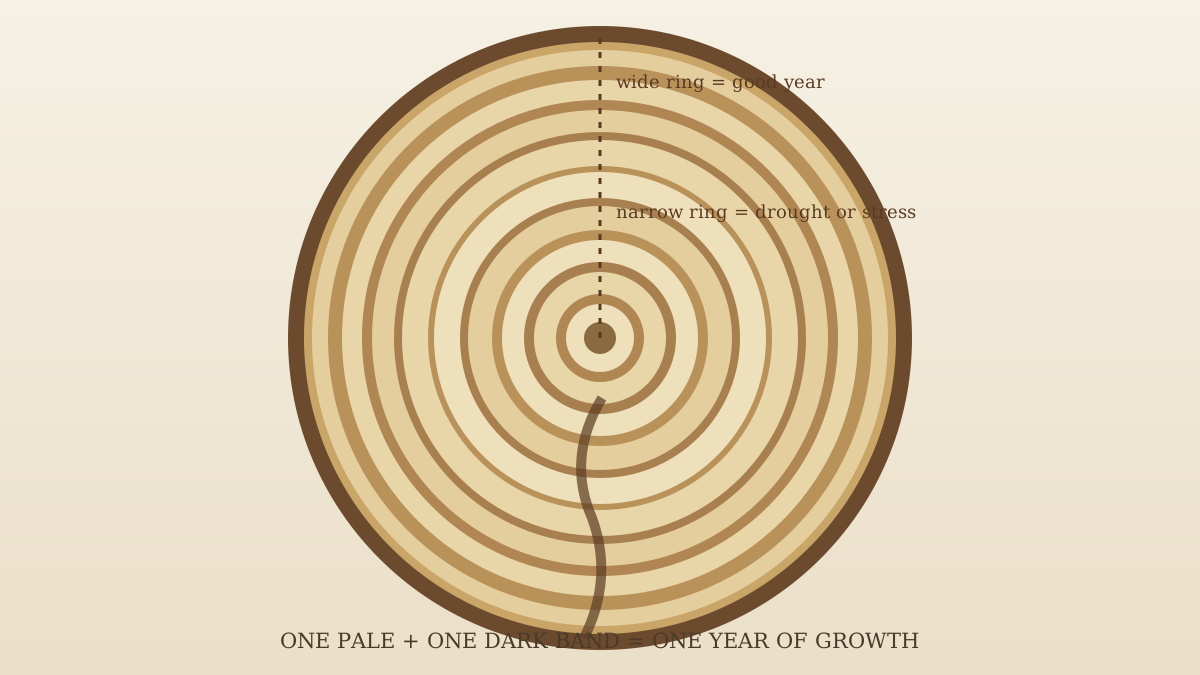
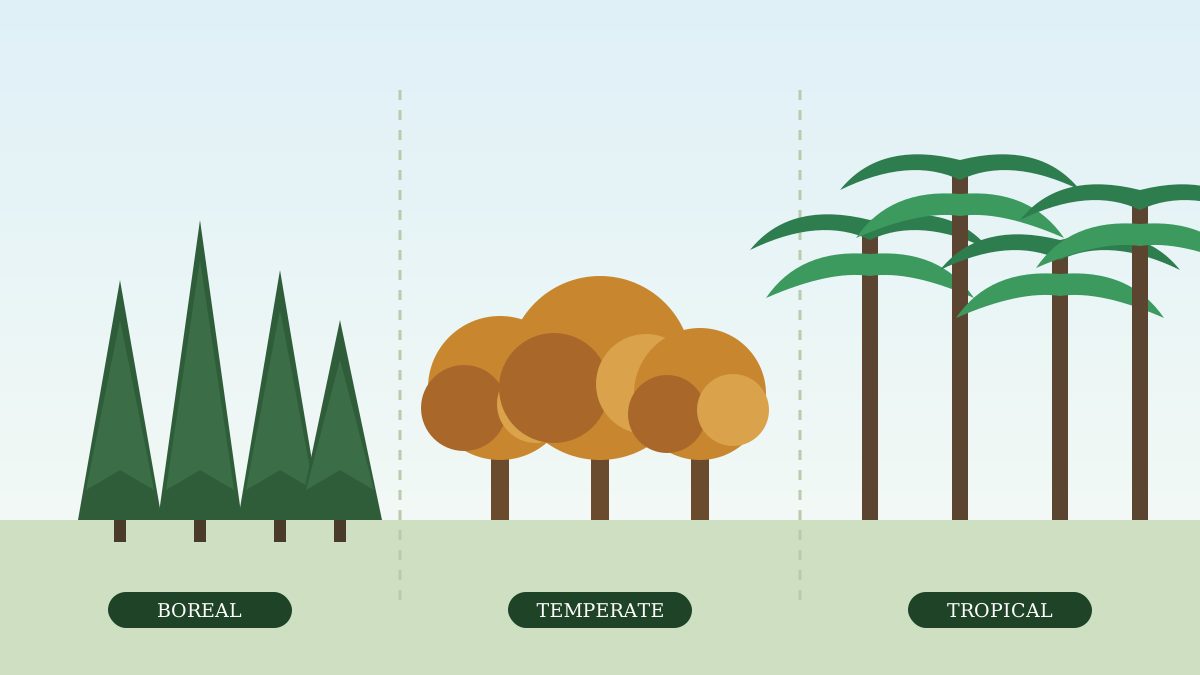
In climates with a strong growing season, a tree builds large, thin-walled cells early in the year — pale earlywood — then smaller, denser cells as growth slows, forming darker latewood. The abrupt boundary between one year's latewood and the next year's earlywood is the line we count. Where growth never pauses, as in many tropical forests, clear annual rings may not form at all.
Reading the good and bad years
Ring width is a record of conditions. A wide ring usually means a favourable year — enough water, enough light, little stress. A narrow one points to drought, deep shade, defoliation by insects or damage. Scars inside the wood can even preserve the date of a fire or a lightning strike, letting researchers reconstruct a forest's disturbance history from the wood itself.
Cross-dating: matching the pattern
The real power of dendrochronology comes from patterns, not counting. Trees in the same region share the same sequence of good and bad years, so overlapping samples — living trees, old beams, archaeological timber — can be matched into chronologies reaching back centuries. That is how a roof beam can be dated to a specific year, and how climate records are extended long before instruments existed.
What it is used for
Ring records help date historic buildings and shipwrecks, calibrate other dating methods, reconstruct past droughts and fire regimes, and inform forest management about how stands respond to stress. It is one of the few archives in nature that is annual, precise and readable with a hand lens.
Conclusion
A stump is not a loss of information; it is a page. Learn to read the widths and the scars, and a piece of wood will tell you about summers no one alive remembers.
Frequently Asked Questions
How do tree rings form?
Most trees in seasonal climates grow fast in spring, producing pale wood, and slowly later in the season, producing darker wood. One pale-plus-dark pair equals one year.
Can you always count age by rings?
In strongly seasonal climates, usually yes. Many tropical trees grow year-round without clear annual rings, so other methods are needed.
What is dendrochronology?
The science of dating and interpreting tree rings, used to date timber in old buildings and to reconstruct past climate and fire history.
Sources & Further Reading
Last updated: 6 August 2026