Mangroves: The Forests That Grow in Salt Water
Most trees die in seawater. Mangroves grow in it — twice a day, on purpose, in mud with almost no oxygen. They occupy a strip of the world that nothing else can farm, and that strip turns out to be one of the most valuable habitats on any coast.
Solving the salt problem
Mangroves are not one species but a group of unrelated trees that converged on the same solutions. Some filter salt at the root, admitting water and rejecting most of the salt; others push it out through glands on the leaves, leaving visible crystals; others park salt in ageing leaves and drop them. All three strategies do the same job: keep the tree's tissues drinkable.
Breathing in mud
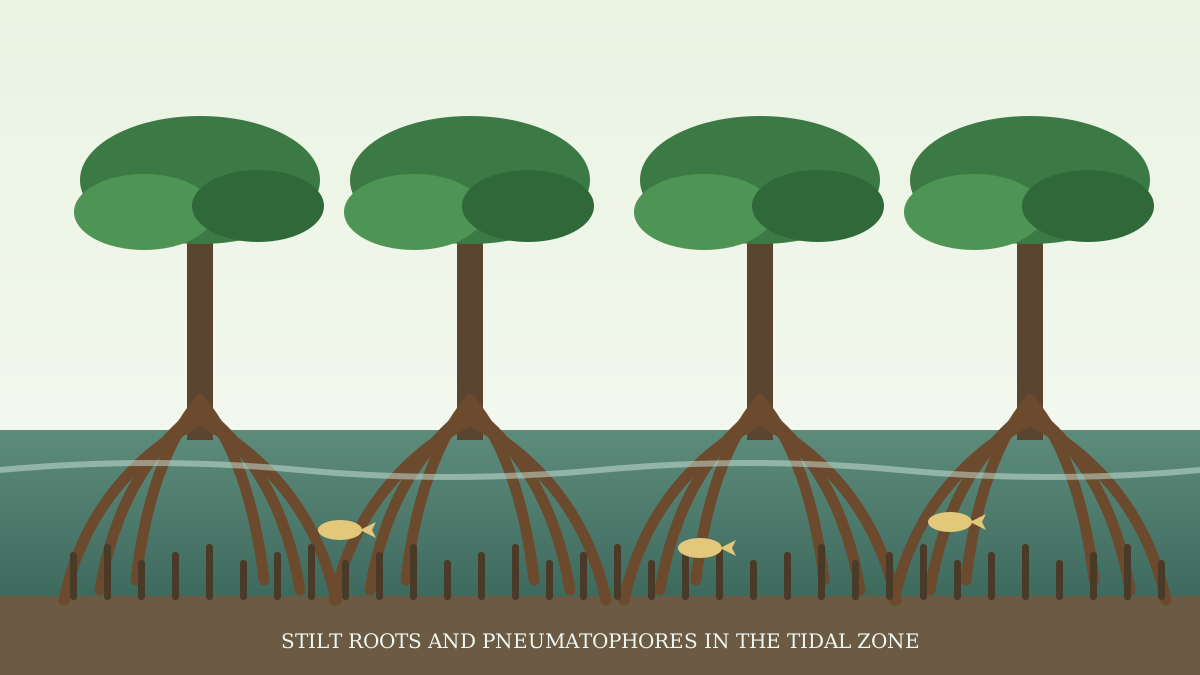
Tidal mud is waterlogged and nearly oxygen-free, so mangrove roots come up for air. Depending on the species you will see arching stilt roots, or pencil-like pneumatophores rising from the mud like a bed of spikes. These structures also trap sediment, which is why mangrove forests slowly build the very land they stand on.
A nursery and a seawall
The tangle of roots is a refuge where young fish and crustaceans grow up out of reach of larger predators, supporting fisheries well beyond the forest itself. The same tangle absorbs wave energy and slows storm surge, and the dense peat soils below store large amounts of carbon — often more per hectare than forests on dry land.
Under pressure, and coming back
Mangroves have been cleared for aquaculture, ports and development on many coasts, and losing them costs fisheries, storm protection and stored carbon at once. Restoration projects have multiplied, and the lesson they keep learning is that hydrology matters more than planting: get the tidal flow right and mangroves often return by themselves.
Conclusion
A mangrove forest looks like a mess of roots in dirty water. It is actually a coastal defence system, a fish factory and a carbon vault — all growing in the one place no other forest will stand.
Frequently Asked Questions
What is a mangrove forest?
A coastal forest of salt-tolerant trees that grows between land and sea in the tidal zone of tropical and subtropical coasts.
How do mangroves survive salt water?
Different species block salt at the roots, excrete it through leaf glands, or concentrate it in old leaves that are then shed.
Why do mangroves have aerial roots?
Tidal mud holds almost no oxygen, so mangroves breathe through roots that rise above the surface or grow as arching stilts.
Sources & Further Reading
Last updated: 6 August 2026