How a Forest Rebuilds Itself: Succession After Fire and Storm
A forest flattened by fire, wind or landslide looks like an ending. Ecologically it is a reset — and what happens next follows a sequence so consistent that you can read a landscape's history from the species growing in it.
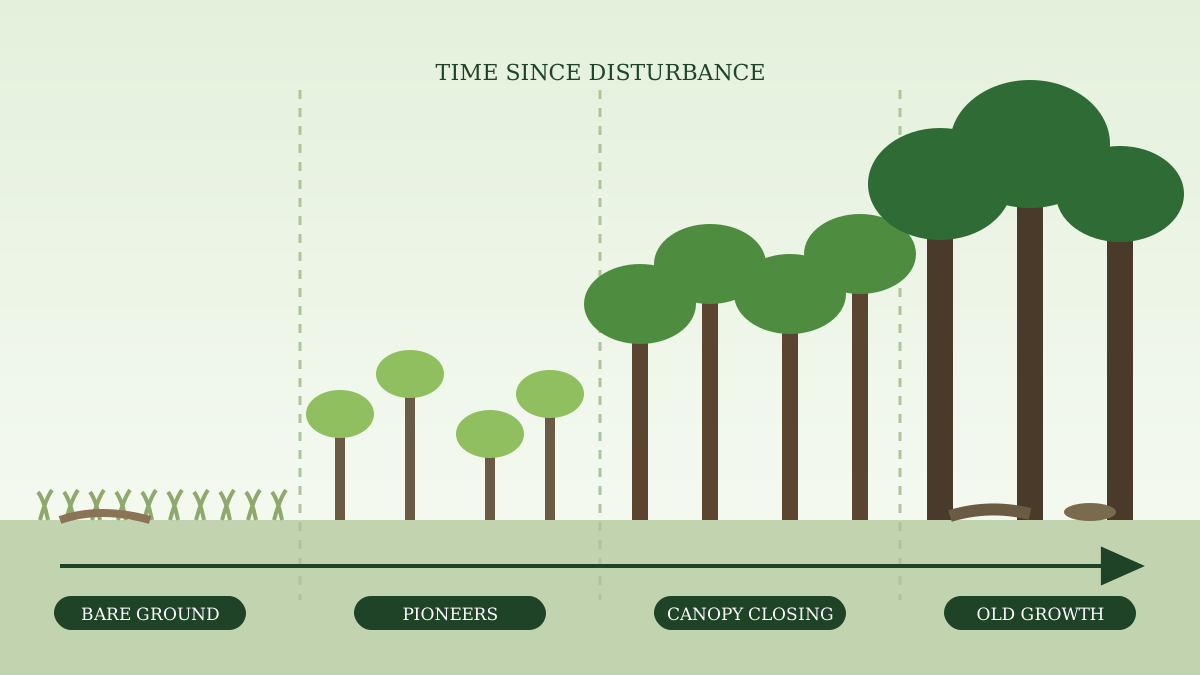
The pioneers move in
Bare ground is colonized first by fast, sun-loving pioneer species: grasses and herbs, then shrubs and light-demanding trees such as birch, alder or pine, whose seeds travel far and germinate in the open. They grow quickly, are relatively short-lived, and their real function is to stabilize soil and create shade.
The shade changes everything
Once a canopy closes, the conditions that let pioneers in disappear. Their own seedlings can no longer grow in their shade, while shade-tolerant species — beech, fir, maple, many tropical hardwoods — germinate patiently below and wait. Over decades the composition shifts beneath an intact canopy, long before it shows from above.
Gaps: succession in miniature
Mature forests do not stand still. When a big tree falls, it opens a light gap, and the same race replays on a small scale: fast species sprint upward, slower ones grind on, one wins the slot. This gap dynamic is why an old forest is a mosaic of ages rather than a uniform stand.
Why old growth is not just old
What distinguishes old growth is structure: trees of many ages, big standing snags, fallen trunks decaying on the floor, deep organic soils, and a canopy with holes in it. These features take a long time to accumulate and support species that live nowhere else, which is why a replanted stand of even-aged trees is not the same habitat as the forest it replaced.
Conclusion
Forests are not built; they assemble themselves, in stages, given time and seed sources. Disturbance starts the clock — and reading which stage a woodland is in tells you both its past and what it is about to become.
Frequently Asked Questions
What is ecological succession?
The predictable sequence by which vegetation recolonizes a disturbed area, from fast-growing pioneer species to slower, shade-tolerant mature forest.
How long does a forest take to recover?
Structure can return within decades, but the complexity of old growth — big trees, deep soils, dead wood — usually takes well over a century.
Is fire always bad for forests?
No. Many forest types evolved with periodic fire and depend on it to open the canopy and trigger regeneration, though severe fires outside natural patterns are damaging.
Sources & Further Reading
Last updated: 6 August 2026